
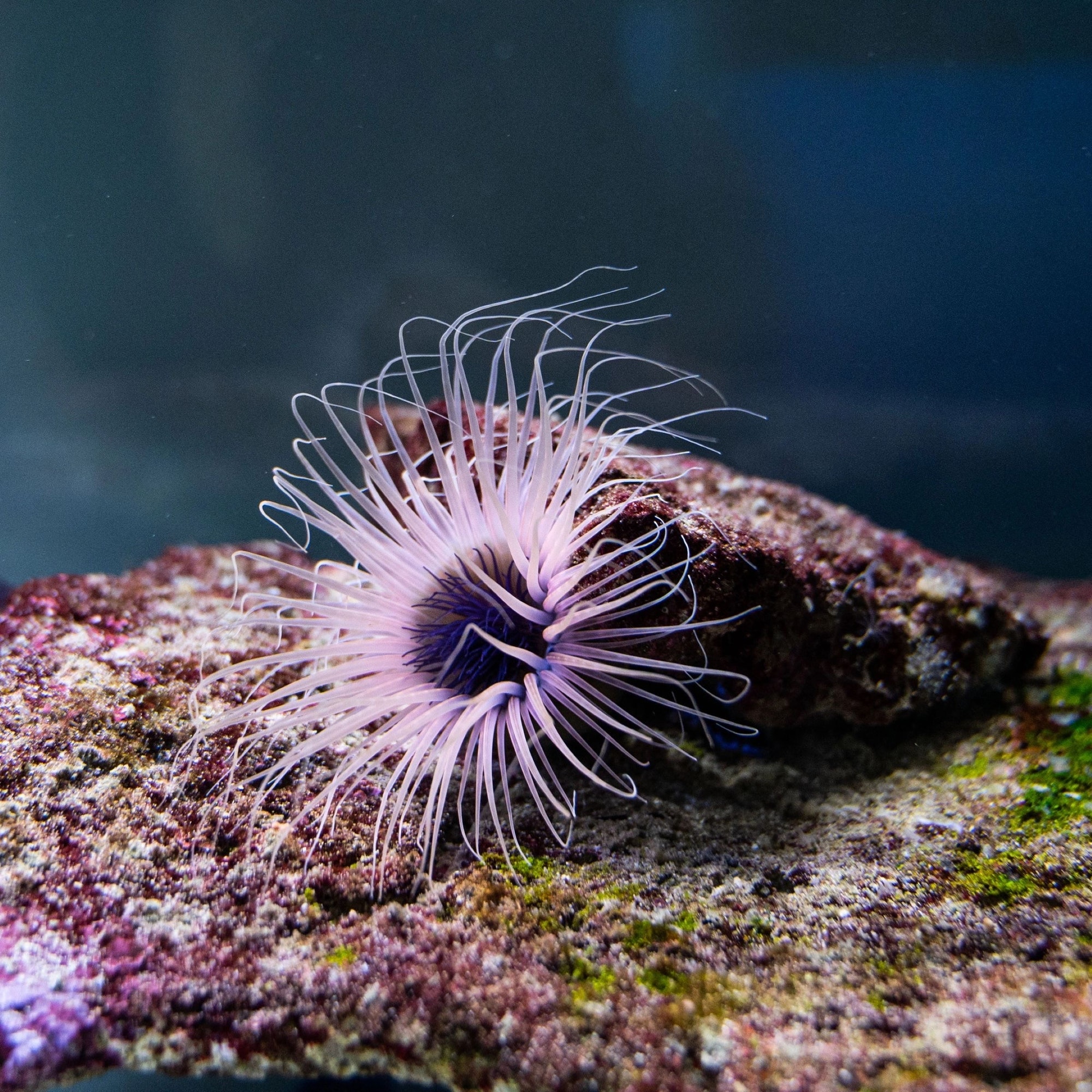

We house over 75 species including a coconut crab, alligator, legless lizard, six-eyed sand spider, and more!
Here are some of our currently featured creatures!
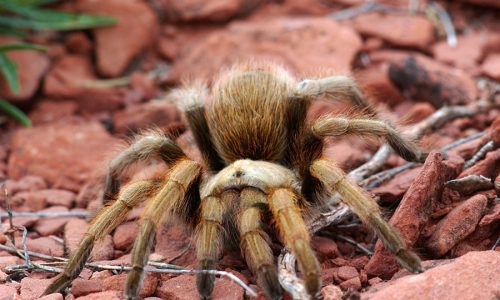
The Arizona Blonde Tarantula (Aphonopelma chalcodes), also called the Desert Blonde is native to the desert regions of southern Arizona and northern Mexico. They can grow up to a 6 inch leg span, with males living 5-8 years, and females living as long as 25 years. They are generally a calm species, hiding in burrows and under rocks. They do not have potent venom, and instead will often defend themselves by kicking tiny barbed hairs off their body that cause irritation. Like most tarantula species, they are nocturnal, which allows them to hide away in the high heat of the day.
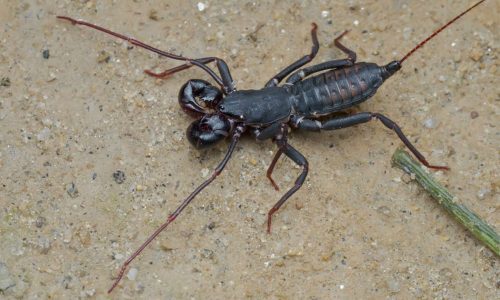
Vinegaroons, also called whip scorpions, are an order of arachnid. Not quite a spider, not quite a scorpion. They are named vinegaroons because they can shoot acid that smells like vinegar. They are excellent tunnelers and will re-dig their burrows every night. They have remained relatively unchanged for over 350 million years according to fossil dating. They can actually be found as a native species in the Southwestern United States, as well as Mexico. They feed on worms, slugs, and other insects.
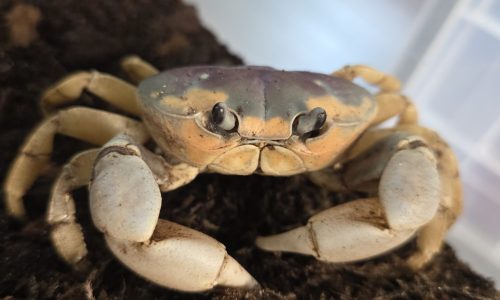
The Moon Crab (Gecarcinus quadratus) is also called the Halloween Crab because of its coloration. These crabs are nocturnal and live in burrows which they dig themselves with their large, purple front pincers. Digging these burrows acts as tilling or aerating the soil which is very helpful for plant growth and nutrient management. Despite living well above the high tide line on land, these crabs do still have gills, as long as their gills stay moist they can survive out of water.
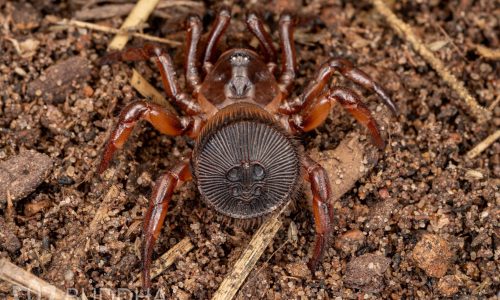
The Thai Hourglass Trapdoor (Cyclocosmia lannaensis) is named for its distinctive and unique abdomen that bears a flat disk on the back. It uses its unique abdomen shape to block its burrow from predators. The other part of its name, "trapdoor", refers to way it catches its prey. These spiders dig burrows, then create a false door, or "trap door", at the top so prey will accidentally fall into their web that lies at the bottom.
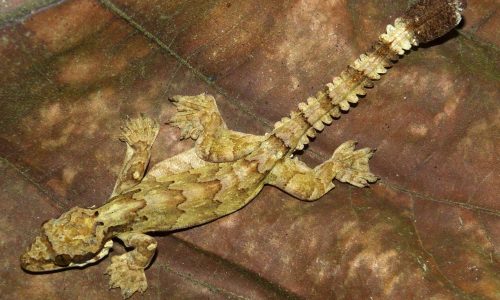
Flying Geckos (Gekko kuhli) are native to the tropical forests, subtropical forests, and woodlands of Southeast Asia. These nocturnal insectivores live for 5-10 years and grow up to 8 inches long. They are known for their skin flaps that stretch from their neck to their hind limbs, webbed feet, and a flattened tail which they use to glide and navigate through the air for distances up to 200 feet.
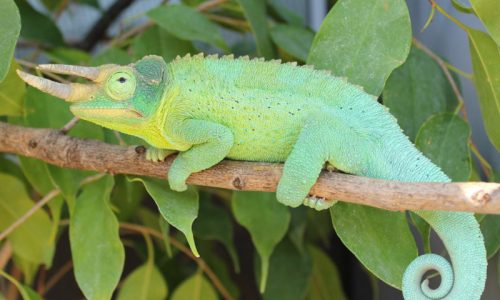
Jackson Chameleons (Trioceros jacksonii) are native to moist montane forests and woodlands of Kenya and Tanzania. These diurnal insectivores live for 5-10 years. Females grow up to 9 inches and males can grow up to 15 inches. Their zygodactyl feet and prehensile tails lend to their arboreal lifestyle. They are known for the showy horns found on males of this species, used for defense and territorial disputes.
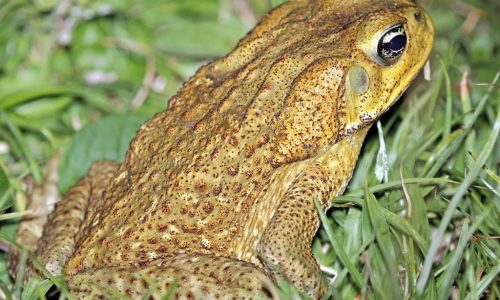
Cane toads (Rhinella marina) are native to the tropical and subtropical forests of Central and South America. These nocturnal omnivores live for 10-15 years and grow up to 7 inches. Cane toads can now be widely found in Australia and Hawaii where they have become a major invasive species though originally introduced for pest control. They are known for their potent poison, bufotoxin which is potentially lethal to many predators.
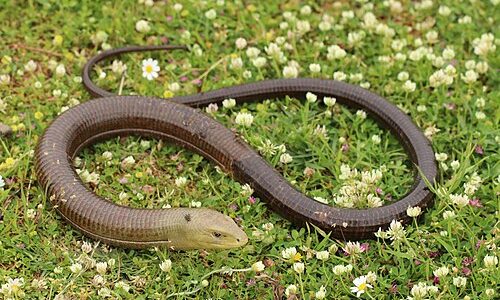
European Legless Lizards (Pseudopus apodus) are native to Southern Europe and Central Asia. They live in grassland, brushland, and sparsely wooded hill habitats. These animals are opportunistic carnivores that can live up to 50 years in captivity. These animals are diurnal and grow to 4.5 feet long. Despite their lack of appendages, these animals can be identified as lizards by the presence of eyelids, external ear openings, and multiple rows of scales along their underside.
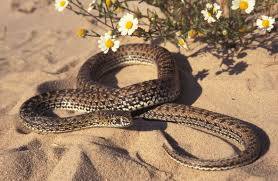
Montpellier Snakes (Malpolon monspessulanus) are native to Southern Europe, Northwestern Africa, and parts of Western Asia. They inhabit shrubland, rocky forest, and agricultural habitats. They grow to be more than 6 feet long making them the largest species of snake native to Europe. They are diurnal carnivores and can live for up to 20 years. This snake is also known for its defensive behavior in which it inflates its neck and raises its front body high off the ground.
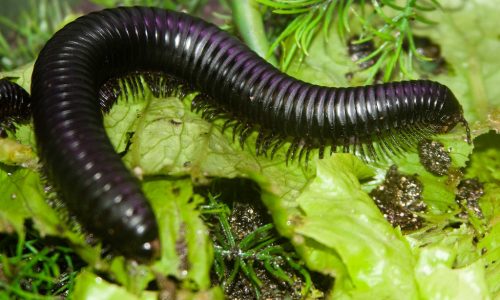
The Giant African Millipede (Archispirostreptus gigas) is the largest living species of millipede, growing up to 12 inches long. Millipedes are detritivores, or decomposers. This means they break down dead plant and organic matter on the forest floor and turn it into nutrients available to smaller creatures. They play a crucial role in their ecosystem. Their first line of defense is to curl up tightly in order to protect themselves, but if they feel really threatened, they can release cyanide from the pores of their body. They can have anywhere between 300 - 400 legs when fully grown.
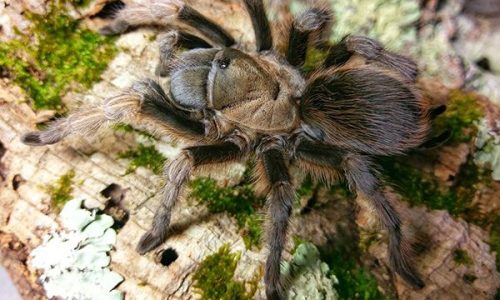
The Chiricahuan Gray Tarantula (Aphonophelma gabeli) is named for its primary habitat, the Chiricahuan Desert. Their coloring ranges from light brown to gray, allowing them to camouflage into the rocky landscape of the desert. They can grow up to a 5.5” leg span, with females tending to be larger than males. They feed on insects like crickets and grasshoppers and create burrows in dry, loose soil in order to quietly wait for their prey. This species is known for its docile personality, and they lack potent venom. Female Chiricahuan Gray Tarantulas can live for up to 25 years with males living around 7 years.
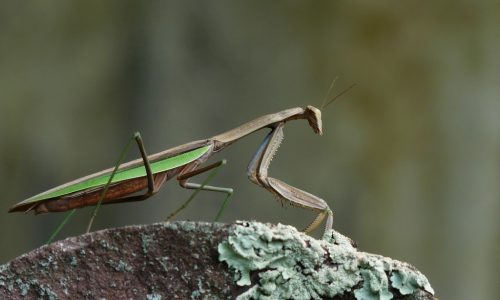
The Chinese Mantis (Tenodera sinensis) is what most people think of when they think of mantids, or praying mantises, but they are actually an invasive species in North America. They have incredibly quick reflexes and can easily catch prey. They'll sit and wait in tall plants for prey to go by and quickly grab them with their front legs. They feed mostly on other insects, but there have been sightings of them taking down small vertebrates such as hummingbirds. This mantid species only lives for about 12 months.

The Giant Rainforest Scorpion (Gigantometrus swammerdami) is the largest species of scorpion, coming in at 9 inches long. Like most new world scorpions, they don't have very potent venom becasue they have adapted to crushing their prey with their pincers instead. They can range in color from reddish-brown to a deep reddish-black. This helps them blend into their favorite hiding spots in the forests in India, under big leaf litter piles.
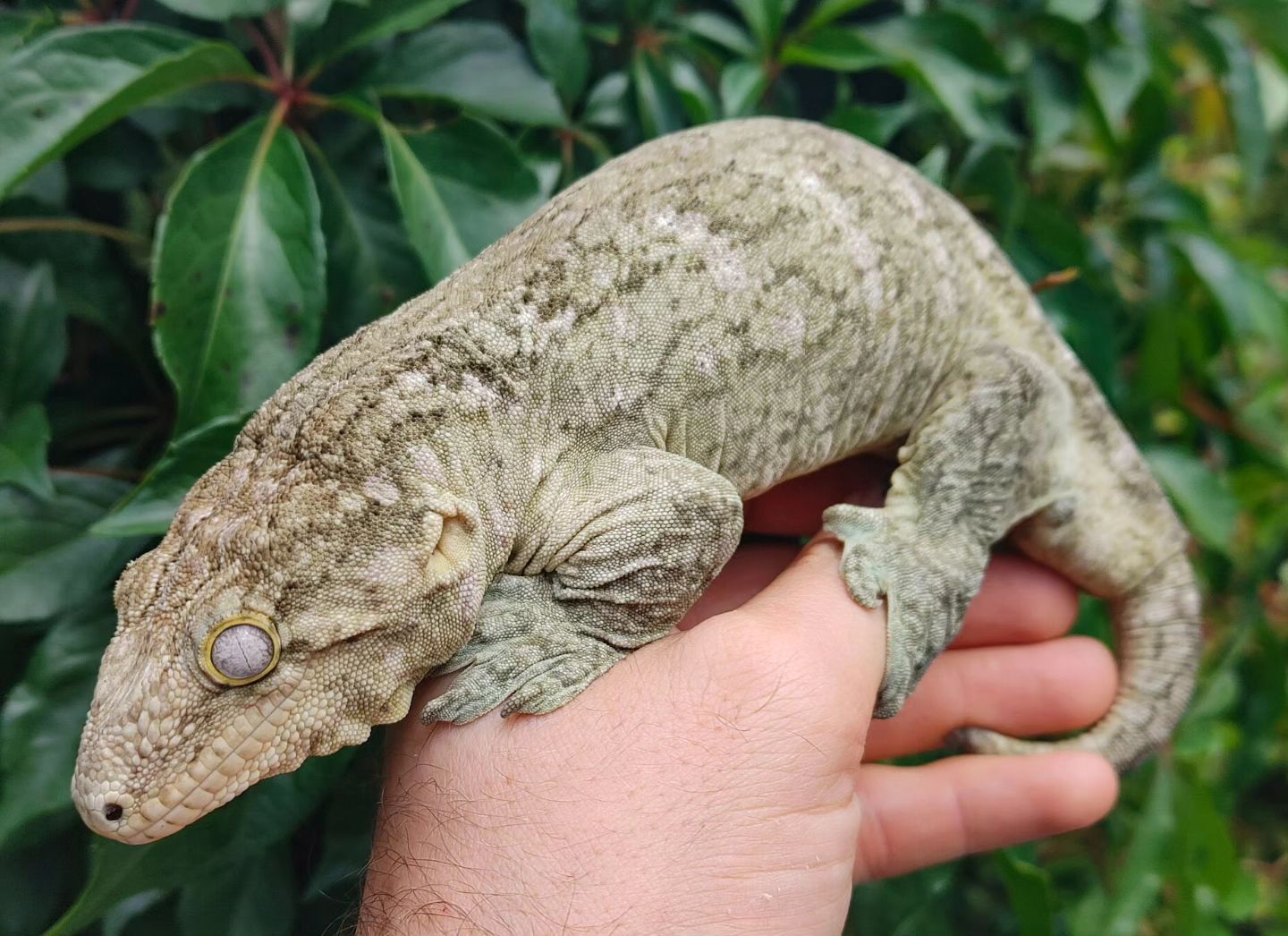
Leachie Geckos (Rhacodactylus leachianus) are native to southern New Caledonia, an archipelago off of Australia. They inhabit tropical evergreen forests. These animals can grow up to 17 inches long and in captivity can live up to 20 years. They are the largest species of gecko in the world, a trait attributed to a phenomenon called island gigantism. Despite being ectotherms, the animals are nocturnal. Leachie geckos are omnivorous and regularly eat both insects and fruit. They are also important seed dispersers due to their frugivorous nature.
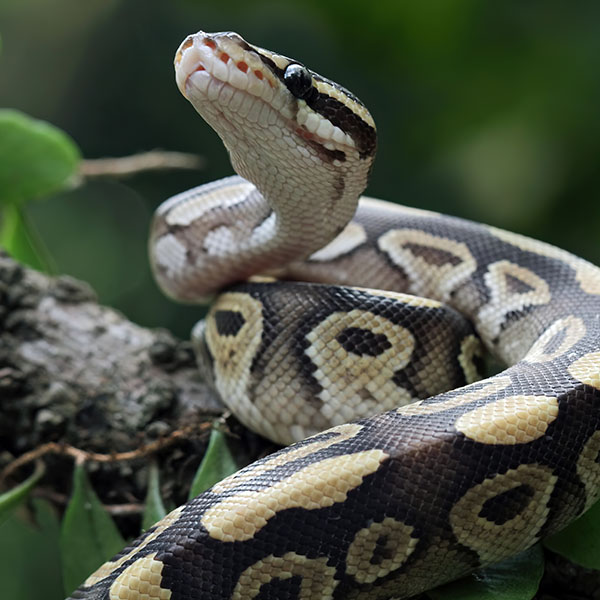
Ball Pythons are native to the grasslands, shrublands, and open forests of sub-Saharan Africa. These nocturnal carnivores live for 20-30 years and grow up to 5 feet long. They are non-venomous and attack prey by constricting them. These animals are named for their defensive behavior in which they curl up into a tight ball and tuck their head within the coil.
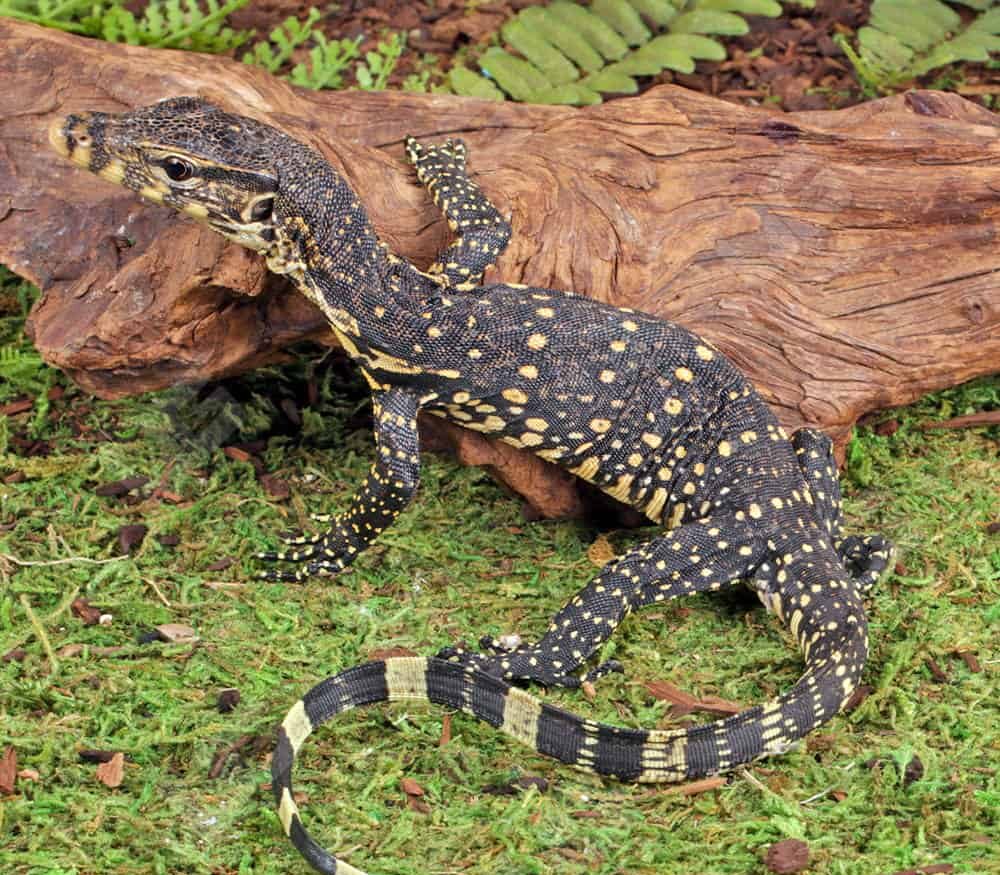
Sumatran Water Monitors (Varanus salvator) are native to the mangrove swamps, wetlands, forests, rivers, and streams of South and Southeast Asia. These diurnal carnivores live up to 25 years and grow up to 8ft long. They are one of the largest species of monitor lizards in the world, second only to the Komodo dragon. They are excellent swimmers, climbers, and runners which can reach up to 15mph on land and 9mph while swimming.
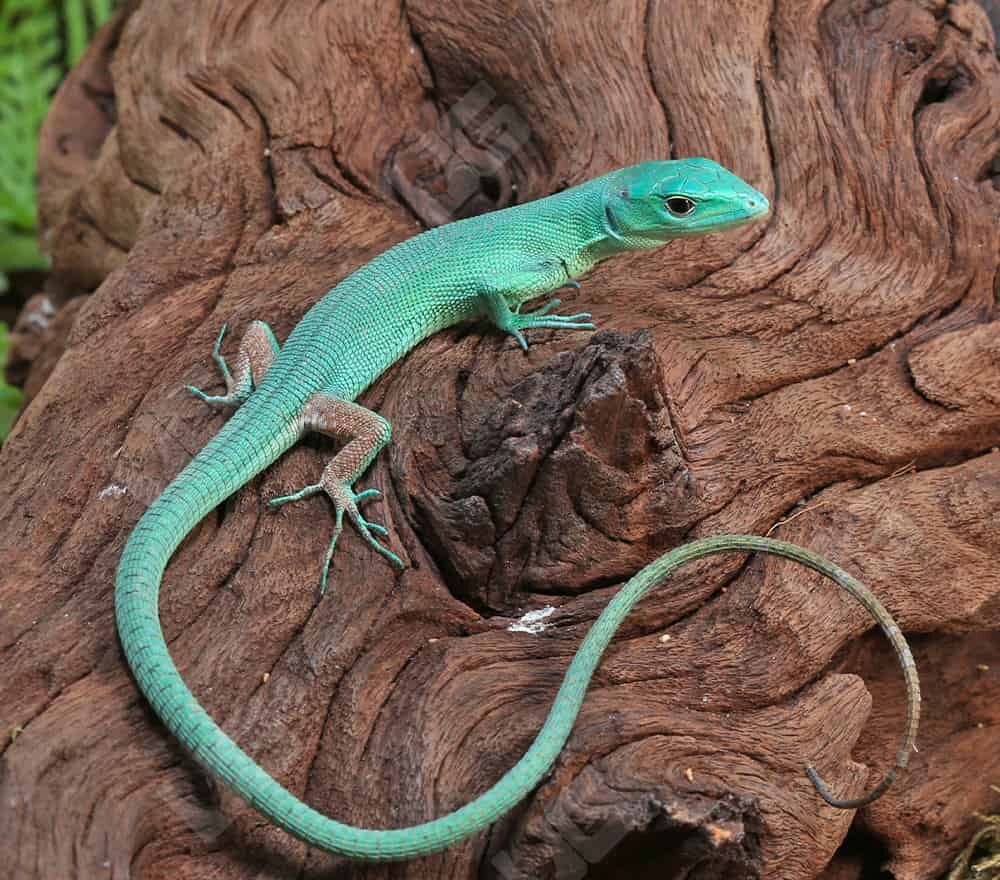
Green Keeled lizards (Gastropholis prasina) are native to the tropical rainforests and woodlands of Eastern Africa in Kenya and Tanzania. They are diurnal and arboreal insectivores. These animals live for 10 to 15 years and grow up to 16 inches long with their tails making up at least 70% of their total length. These tails are also prehensile and help them in climbing. They are named for the unique shape of their scales, each of which has a ridge, called a keel, in the center.
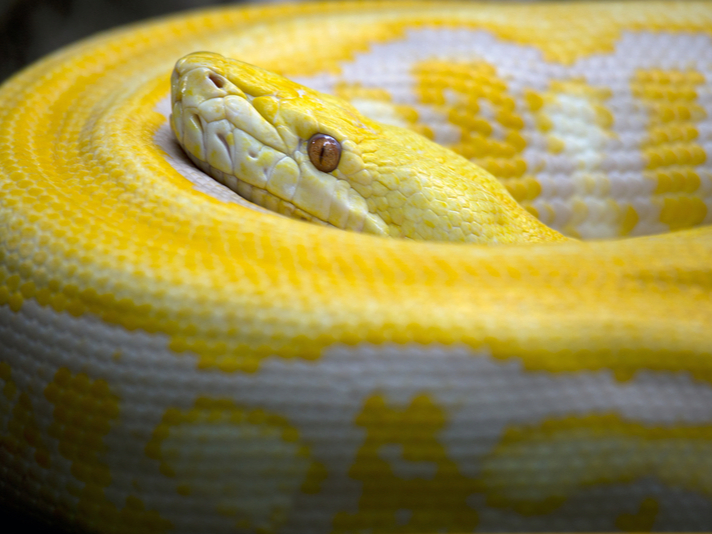
Reticulated Pythons (Malayopython reticulatus) are native to South and Southeast Asia. They inhabit tropical rainforests and woodlands, often nearby grasslands and bodies of water. They can grow to be more than 20 feet long making them the longest species of snake in the world. They are nocturnal carnivores that can live up to 25 years. They have specialized heat sensing organs called pit organs along their face that help them to hunt. They are also known to be excellent swimmers.
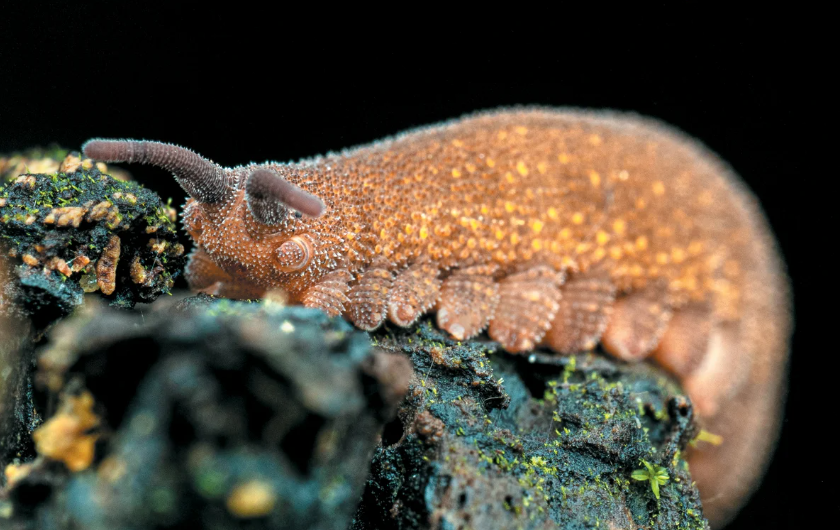
Barbados Brown Velvet Worms (Epiperipatus barbadensis) are native to Barbados. This species inhabits tropical rainforests. This animal will live for 5 to 6 years and can grow to 3.5 inches long. They are nocturnal carnivores that feed on other invertebrates. This type of animal is considered the common ancestor of the roundworm (leading to human) and arthropod branches on the tree of life.
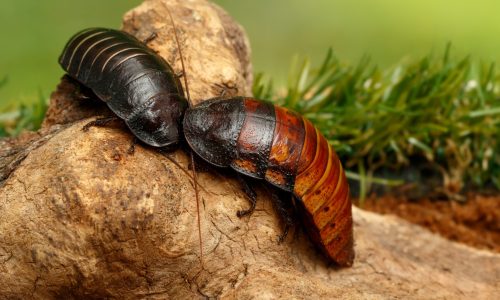
The Madagascar Hissing Cockroach (Gromphadorhina portentosa) get their name from the distinctive hissing sound they create by expelling air from their bodies. They are one of the largest cockroach species. These cockroaches live on the forest floor, often found in dead and decaying trees. They can live up to 5 years in captivity and grow up to 4 inches long. They feed on fruits, vegetables, and other decaying plant material. The males have a large bump on their back that is used to show off for females and challenge other males. Unlike other roach species, the Madagascar Hissing Cockroach is wingless, but they are able to run quite fast. They do not like light and are therefore nocturnal.
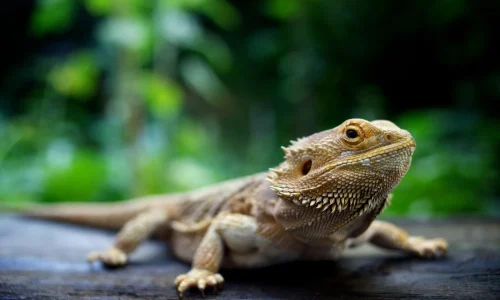
Bearded Dragons were named for their ability to puff out the skin under their throats. They change the color of their throats based on their mood and they can use their tongues to taste smells. They are common as pets as they tend to be calm, social, and friendly. They are very fast and can even run standing up on their back two legs. They can grow to be about 2 feet long, with half of their body length being their tail. They eat insects as well as vegetables, fruits, and even some flowers.
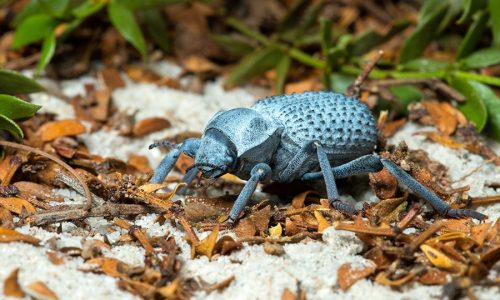
The Blue Death Feigning Beetle (Asbolus verrucosus) also has the name "Ironclad Beetle" as their exterior is so hard that they can be squeezed without cracking, breaking, or taking any damage. The name "death feigning" comes from the fact that they can play dead if they feel threatened. The blue coloring is actually a waxy substance that they slowly lose as they get older, or if they are too moist. They are native to the Southwest United States and can live for up to 17 years in the wild.
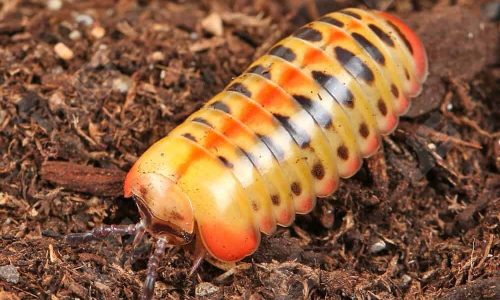
Candy Corn Pill Millipedes (Rhopalomeris Carnifex) are a Halloween colored species native to Southeast Asia. Although they are often mistaken for isopods, the Candy Corn Pill Millipede, just like all other millipedes, are detritivores, or decomposers, and feed on organic matter such as dead plants and leaf litter.
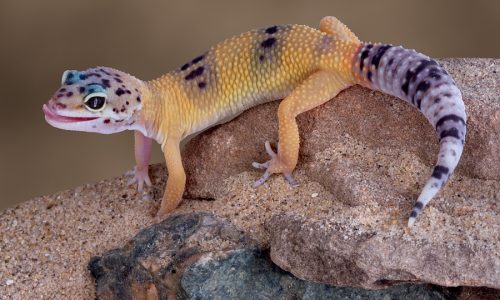
Leopard Geckos (Eublepharis macularius ) are native to southeastern Afghanistan, northwestern India, Pakistan, and parts of Iran and Iraq. They inhabit rocky deserts and sparse grasslands. These animals can live for up to 20 years and typically grow to around 8 inches long. These animals are insectivores. They are also crepuscular, meaning they are most active at dawn and dusk. Their name comes from their spotted pattern and the swishing movement of their tails.
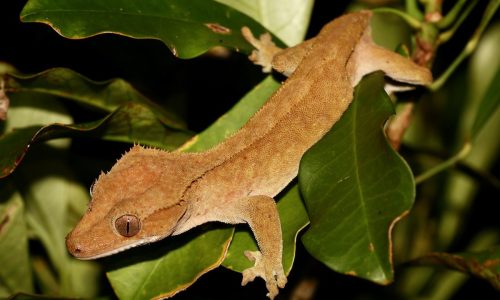
Crested Geckos (Correlophus ciliatus) are native to southern New Caledonia, an archipelago off of Australia. They inhabit tropical evergreen forests. These animals can grow up to 10 inches long and in captivity can live up to 20 years. Despite being ectotherms, the animals are nocturnal. Crested geckos are omnivorous and regularly eat both insects and fruit. They are arboreal and able to climb surfaces through a phenomenon called “dry adhesion” caused by microscopic divisions of their toe pads.
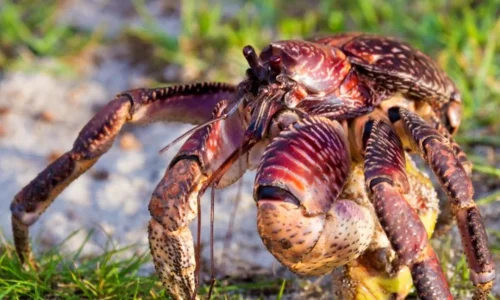
Coconut Crabs (Birgus latro) are native to Indian and western Pacific Oceans. They inhabit tropical rain forests, coastal scrub woodlands, coconut palm groves, and seashores. This animal can live to be 60 years old. They can grow to have a leg span of 30 inches and weigh up to 9 pounds. They have incredibly strong claws that exert the greatest force of any terrestrial animal.
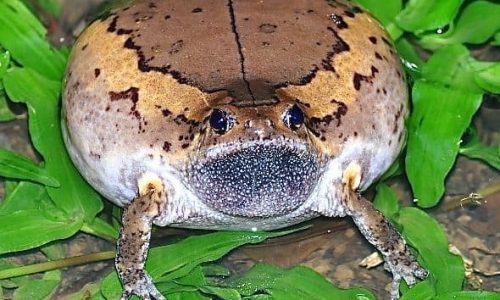
Banded Bullfrogs (Kaloula pulchra) are native to Southeast Asia where they inhabit wetland, forest edge, and anthropogenic habitats. These nocturnal insectivores live for 5-10 years and grow to 3 inches long. They are fossorial, meaning they spend most of their life burrowed. In particularly dry conditions, these frogs perform a behavior called cocooning where they seal themselves in a cocoon of shed skin and mud to retain moisture.
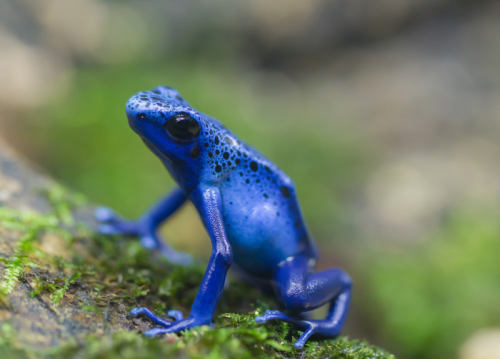
Poison Dart Frogs (Dendrobates tinctorius azureus) are native to Sipaliwini Savanna of southern Suriname and Northern Brazil. They inhabit isolated pockets of rainforest surrounded by savanna. These animals can live for up to 15 years and to 2 inches long. These animals are known for the potent poison they produce on their skin which is derived from the insects they eat in the wild. Each frog has a spot pattern that is unique to the individual, similar to a human’s fingerprint.
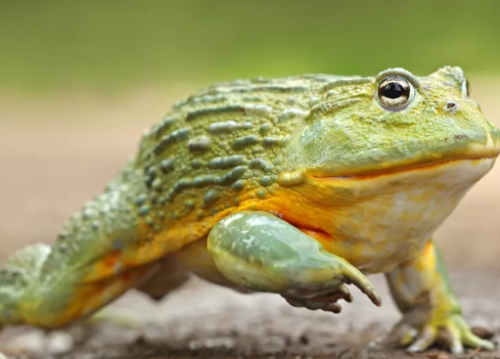
Giant African Bullfrogs (Pyxicephalus adspersus) are native to Subsaharan Africa. They live in savannas, shrublands, and tropical swamps. These nocturnal carnivores live up to 30 years in captivity. Males grow to be 9 inches long and 5lbs while females grow to up to 5 inches and weigh 2lbs. They are known for their large size, loud vocalizations, and fierce nature. They are known to aggressively defend their young and their territories.